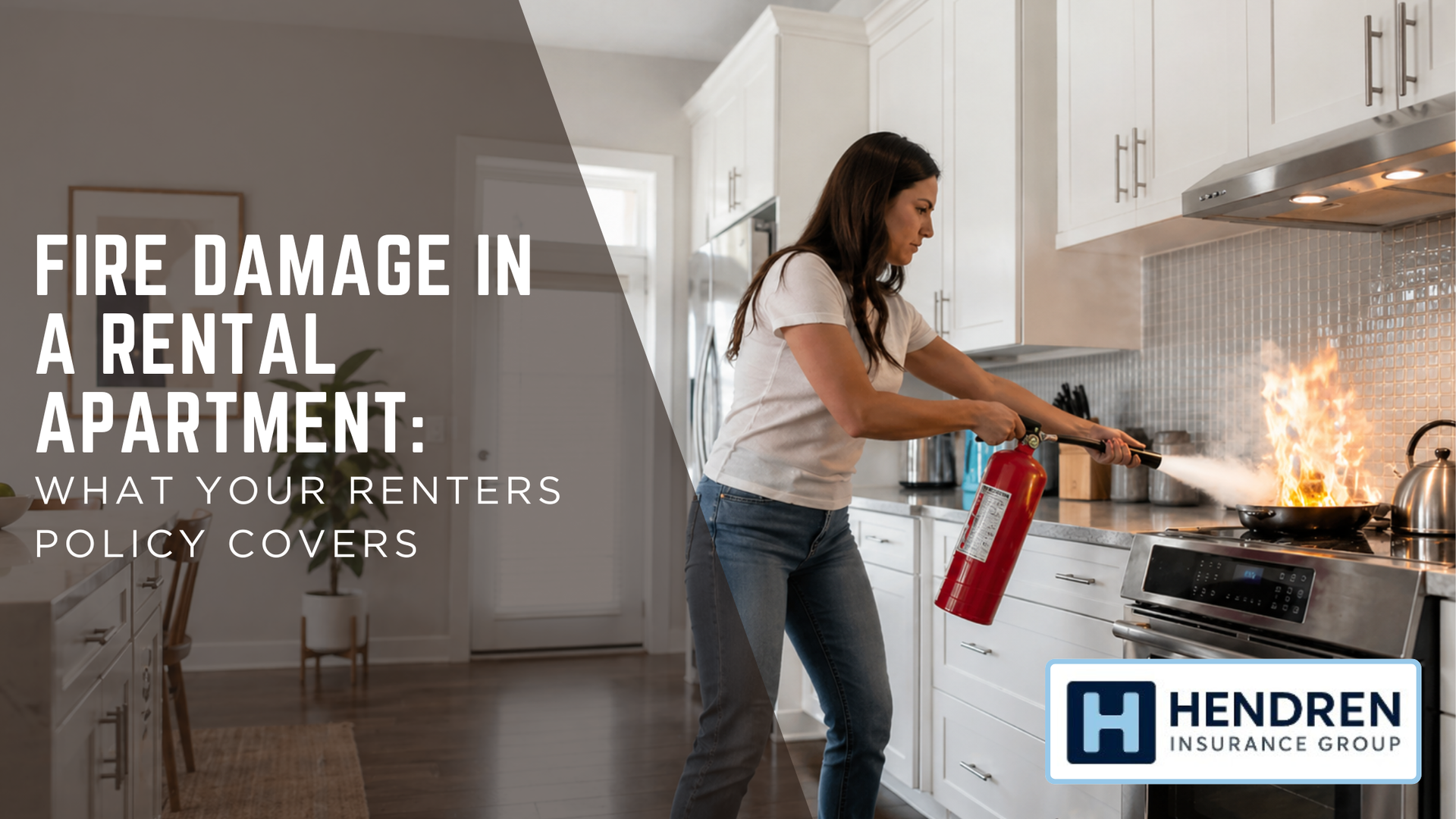
A renters insurance policy can help after fire damage by covering your personal belongings, temporary living expenses, and personal liability in certain situations, but it does not insure the building itself. What is covered depends on the cause of the fire, the damage involved, and the specific terms and limits in the policy.
Why Fire Losses In Rentals Create So Much Confusion
After a fire in an apartment, many renters are not sure what their
policy actually does. That confusion is understandable because several different insurance policies may be involved at once. The landlord’s insurance usually applies to the building structure, while the renter’s policy is generally designed to protect the tenant’s belongings and certain related expenses.
A common issue we see is renters assuming the landlord’s policy will automatically cover everything inside the unit, including clothing, furniture, electronics, and other personal property. In most cases, that is not how it works. The building owner’s coverage and the renter’s coverage serve different purposes. In Owasso, OK, this distinction matters because even a relatively contained apartment fire can create smoke damage, water damage, displacement, and personal property loss that affect the tenant immediately.
What Renters Insurance Usually Covers After A Fire
Most standard
renters policies include personal property coverage for covered losses such as fire and smoke damage. If a fire damages or destroys your belongings, the policy may help pay to repair or replace them, subject to the deductible, policy limits, and the valuation method in the contract.
Common items that may be covered include:
- Furniture
- Clothing
- Electronics
- Kitchen items
- Bedding
- Personal décor
- Appliances you own yourself
- Other personal belongings inside the apartment
This is often the most visible part of the claim because it is the tenant’s own property that has been directly damaged. But the policy may also help in other ways beyond replacing belongings, which is where many renters miss part of the value of the coverage.
What It Does Not Cover
One of the most important limits to understand is that
renters insurance usually does not cover the apartment building itself. The walls, roof, flooring owned by the landlord, built-in systems, and the structure generally fall under the property owner’s insurance, not the renter’s policy.
A common issue we see is a tenant hearing that the apartment suffered major fire damage and assuming their renters insurance should address everything because they live there. In reality, the policy is focused mainly on the renter’s personal property, certain living expense issues, and liability exposure where applicable. It does not replace the landlord’s building insurance.
That distinction matters because it helps set realistic expectations right away. A renters policy may be extremely valuable after a fire, but it is not meant to function like a property owner’s full building policy.
Smoke And Water Damage Can Be Part Of The Same Fire Claim
Fire losses often involve more than visible flames. Smoke damage, soot contamination, and water used to extinguish the fire can all affect a renter’s belongings. In some cases, the apartment unit may not be fully burned, yet the contents are still heavily damaged by smoke or firefighting efforts.
This is one reason
renters should not assume that only charred items count as fire loss. A couch, mattress, clothing, electronics, or kitchenware may still be unusable after smoke exposure or water damage even if the fire did not directly burn those items.
Around Bailey Ranch or near Centennial Park, renters often think first about the most visibly damaged items, but a more complete inventory is usually important because indirect fire-related damage can add up quickly.
Additional Living Expense Coverage Can Be Just As Important
If the apartment becomes unlivable because of a covered fire loss, renters insurance may also include Additional Living Expense coverage, sometimes called loss of use coverage. This can help with the extra costs of living somewhere else temporarily while the apartment is being repaired or while you secure another place to stay.
That may include reasonable increases in costs such as:
- Hotel stays
- Temporary rental housing
- Extra meal costs if you cannot cook normally
- Laundry expenses
- Certain other necessary temporary living costs
In our work with clients, one of the most common misunderstandings is thinking
renters insurance only matters for replacing belongings. For many tenants, the immediate challenge after a fire is not just losing property. It is figuring out where to stay and how to manage added day-to-day expenses. Additional living expense coverage can become one of the most valuable parts of the policy very quickly.
When Liability Coverage May Matter After A Fire
Renters insurance also usually includes personal liability coverage. This part of the policy may matter if the tenant is alleged to have caused the fire or contributed to damage affecting others. For example, if a cooking fire spreads, a candle causes damage, or some other negligent act is claimed to have started the loss, liability protection may become relevant.
That does not mean the tenant is automatically responsible any time a fire happens in the unit. It means the policy may help if the tenant is legally liable for injury or property damage to others, subject to the policy terms.
A common issue we see is renters not realizing their policy protects against more than property loss. If a neighbor’s belongings are damaged or someone alleges the tenant’s actions started the fire, liability coverage may become an important part of the claim situation.
Replacement Cost Vs Actual Cash Value Matters
Not all renters policies settle property losses the same way. Some provide replacement cost coverage, while others pay on an actual cash value basis. This distinction can make a significant difference after a fire.
Replacement cost coverage generally aims to pay closer to what it costs to replace the damaged item today, while actual cash value typically factors in depreciation. That means older furniture, electronics, or clothing may be valued at less than what it would cost to buy similar replacements now.
A common issue we see is a renter assuming every damaged item will be reimbursed at full current replacement value. That may not happen unless the policy is written that way. The coverage form and endorsements matter, especially after a large fire loss where many household items must be replaced at once.
What Renters Should Do Right After A Fire
Once everyone is safe and emergency responders have handled the immediate situation, renters should take practical steps to protect the claim.
Helpful first steps include:
- Notify the insurer as soon as possible
- Take photos or video of the damage if it is safe to do so
- Make a list of damaged belongings
- Save receipts for emergency living expenses
- Avoid discarding property before documentation unless safety requires it
- Ask the landlord or property manager what part of the building loss is being handled separately
A common mistake we see is waiting too long to start the property inventory. After a fire, it can be hard to remember everything
that was in the apartment. Starting the list early makes the claim process easier and usually more accurate.
In Owasso, OK, renters who keep better records of their belongings and temporary expenses often have a much smoother experience when the claim is reviewed.
Why Policy Limits Still Matter Even With Fire Coverage
Having
renters insurance does not automatically mean there is enough coverage for everything lost in a major fire. The personal property limit, additional living expense terms, deductible, and any sublimits for special categories all matter.
For example, jewelry, collectibles, business property, or high-value electronics may be subject to different limits than ordinary household goods. A common issue we see is a tenant carrying a basic renters policy but never reviewing whether the property limit still reflects what they actually own. After a fire, that gap can become obvious fast.
That is why renters should review not just whether they have a policy, but whether the policy amount is realistic for the contents and temporary living needs it may need to support.
Conclusion
A
renters policy can provide important protection after fire damage by covering personal belongings, smoke and related damage, temporary living expenses, and personal liability in certain situations. What it usually does not cover is the apartment building itself, which is generally the landlord’s insurance responsibility. The real value of the policy comes from understanding that it protects the renter’s side of the loss, not the entire property.
For renters in Owasso, OK, reviewing fire coverage before a loss happens can make a major difference in avoiding confusion about what the policy would actually do in a real emergency.
At Hendren Insurance Group, we believe in protecting what matters most to you. Our experienced team is here to help you find insurance coverage that’s both affordable and customized to your unique needs. Contact us today at (918) 272-4700 or CLICK HERE to request your free quote.
Disclaimer: The content of this blog is intended solely for general informational use. For advice tailored to your situation, consult a licensed insurance professional who can offer expert recommendations.
Hendren Insurance Group
Owasso, OK
(918) 272-4700
https://www.insureowasso.com