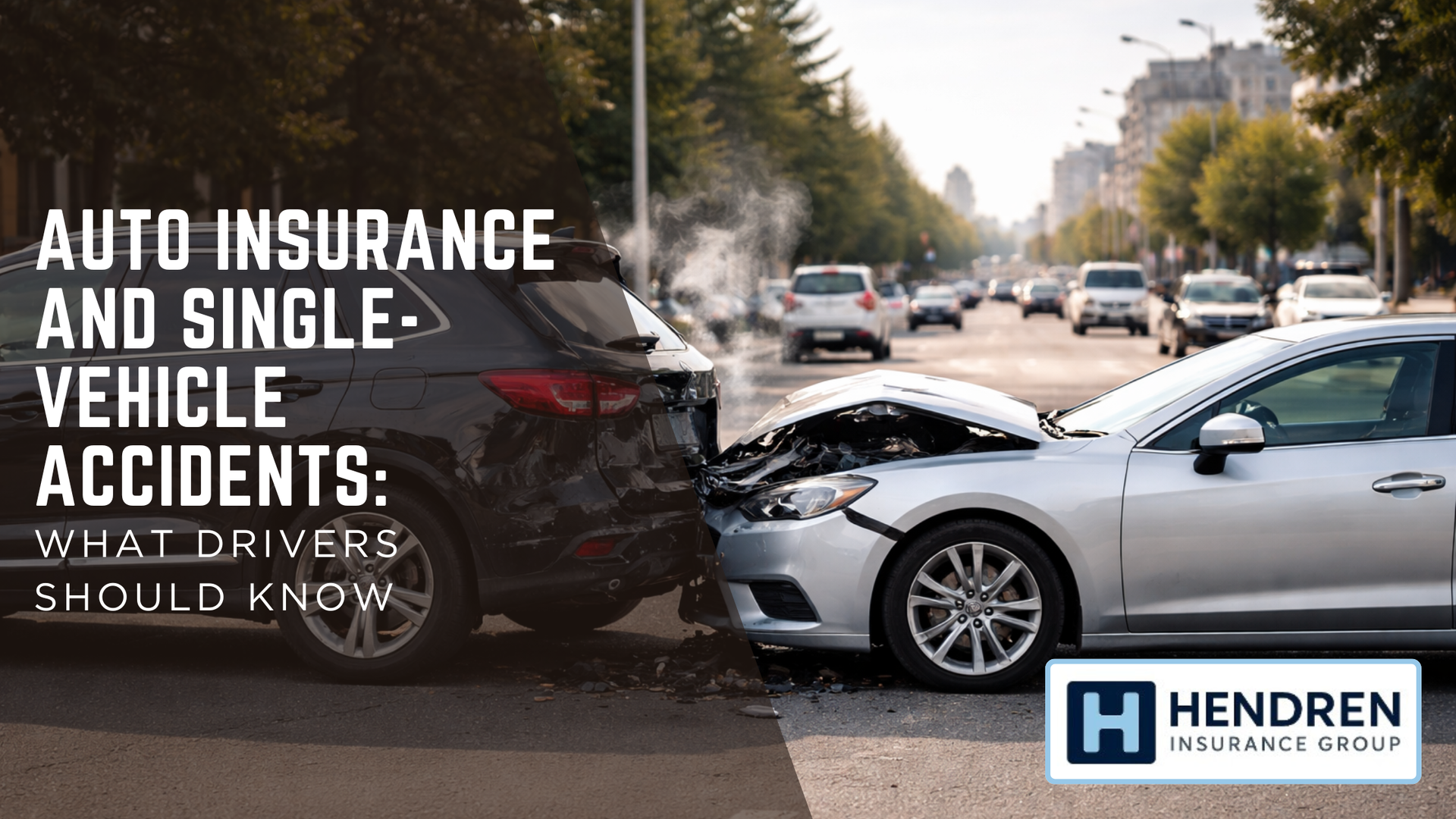
Single-vehicle accidents are usually covered by your own auto insurance, but the type of coverage that applies depends on what happened and what coverages you carry. Collision often handles damage from hitting an object or rolling over, while comprehensive may apply in certain non-collision situations like striking an animal or damage from theft, vandalism, or weather.
Why Single-Vehicle Accidents Cause So Much Confusion
Many drivers assume an accident only “counts” for insurance if another car is involved. That is not true. A single-vehicle accident can still create major damage, injuries, and
insurance consequences, and in some cases it can be just as financially serious as a multi-vehicle crash.
A common issue we see is a driver thinking, “Since I only hit a pole, curb, ditch, fence, or tree, maybe insurance does not apply the same way.” In reality, your auto policy may still respond, but only if you have the right first-party coverage in place. Liability coverage alone usually will not pay for damage to your own vehicle in a single-vehicle accident. In Owasso, OK, that misunderstanding often shows up after weather-related roadway conditions, animal encounters, or simple loss-of-control incidents where the driver did not realize how the claim would be treated.
What Counts As A Single-Vehicle Accident
A single-vehicle accident generally means the insured driver’s vehicle is the only one involved in the crash event, even if the car strikes something else. That “something else” might be a fixed object, roadway barrier, tree, guardrail, mailbox, building, or ditch.
Examples may include:
- Hitting a utility pole
- Sliding into a fence
- Rolling the vehicle in a ditch
- Backing into a structure
- Swerving and striking a tree
- Running over debris and damaging the vehicle
- Hitting an animal, depending on the claim circumstances
The important point is that no second vehicle needs to be involved for there to be a valid
auto insurance claim. The coverage question is usually about what caused the damage and what physical damage coverages the driver carries.
Collision Coverage Is Usually The Key Coverage
In most single-vehicle accidents involving impact, collision coverage is the part of the
auto policy that may help repair or replace your vehicle. Collision generally applies when your car hits another object or overturns, regardless of whether another driver was involved.
That means collision may help in situations like:
- Striking a tree or pole
- Sliding into a guardrail
- Hitting a building or curb
- Overturning or rolling the vehicle
- Backing into a stationary object
This is one of the most important distinctions drivers miss. A common issue we see is a policyholder carrying only liability insurance and assuming it will help because the accident was serious. Liability coverage is designed mainly to protect against damage or injury you cause to others. It usually does not pay for damage to your own car in a single-vehicle crash. Collision is usually what makes the difference there.
When Comprehensive Might Apply Instead
Not every single-vehicle loss falls under collision.
Comprehensive coverage may apply when the damage comes from a non-collision cause. This is where the details matter, because some events that feel like “accidents” are actually treated differently under the policy.
Comprehensive may apply to losses such as:
- Hitting a deer or other animal in many policy forms
- Theft
- Vandalism
- Fire
- Hail
- Falling objects
- Flooding or other covered non-collision events
A common issue we see is a driver not knowing whether an animal strike is collision or comprehensive. In many cases, hitting an animal is treated under comprehensive rather than collision, which can matter because the deductible may be different and the claim may be viewed differently within the policy structure.
Around Centennial Park or near Bailey Ranch, drivers may face roadway conditions where animals, storm debris, and sudden weather changes all create single-vehicle loss situations that do not fit neatly into one assumption.
What Happens If You Damage Someone Else’s Property
Even though it is called a single-vehicle accident, there may still be property damage to something other than your car. If you hit a fence, mailbox, retaining wall, utility structure, storefront, or other property belonging to someone else, your property damage liability coverage may come into play for that outside damage.
This is another area that causes confusion. Collision may help with your own car if you carry it. Property damage liability may help with the fence or structure you hit if the policy applies. The same accident can trigger different parts of the auto policy for different pieces of the loss.
A common issue we see is drivers focusing only on whether their own car is covered and forgetting that they may also be responsible for what they damaged. That can matter significantly when the struck property is expensive to repair or replace.
How Deductibles Affect Single-Vehicle Claims
If your claim goes through collision or comprehensive, your deductible usually applies. That means the
policy may pay only after subtracting the deductible from the covered loss amount. The deductible can shape whether filing a claim feels worthwhile, especially if the damage is moderate.
For example, if a driver has $1,500 in collision damage and a $1,000 deductible, the claim payment may be much smaller than expected. On the other hand, if the vehicle is heavily damaged or totaled, the deductible may matter far less compared to the overall value of the claim.
In our work with clients, one of the most common frustrations is not that the claim is denied, but that the policyholder did not realize how much of the loss they would still absorb because of the deductible they chose.
Single-Vehicle Accidents Can Still Affect Your Insurance Record
Some drivers assume that because no other vehicle was involved, the claim may not carry the same consequence. That is not always true. A single-vehicle collision can still be treated as an at-fault accident depending on the circumstances, and it may affect future pricing or underwriting review.
This is especially important when the accident involves loss of control, impact with a fixed object, or other facts suggesting the damage arose from the driver’s own operation of the vehicle. A common issue we see is someone saying, “I was the only one involved, so I thought it would be treated differently.” From an insurance rating standpoint, that may not provide the protection they expect.
That does not mean every single-vehicle claim will be treated identically, but drivers should not assume the absence of another car removes all possible premium consequences.
What Drivers Should Review Before A Claim Happens
Single-vehicle accidents are a good reminder that having “car insurance” is not the same as having the right physical damage coverage. A useful policy review should answer practical questions like:
- Do I carry collision coverage?
- Do I carry comprehensive coverage?
- What are my deductibles for each?
- If I hit an object or roll my vehicle, would my policy help with my car?
- If I hit an animal, how would the claim be handled?
- Would I be comfortable paying the deductible I selected?
In Owasso, OK, these questions can help drivers understand whether their current policy is built only to satisfy liability requirements or whether it would also help with the kinds of single-vehicle losses that happen more often than many people realize.
Conclusion
Single-vehicle accidents can still lead to significant insurance claims, but the coverage depends heavily on what happened and which parts of the
policy are in place. Collision usually handles damage from hitting objects or overturning, while comprehensive often applies to certain non-collision losses like animal strikes, weather damage, theft, or vandalism. Liability may also matter if the accident damages someone else’s property, even when no second car is involved.
At Hendren Insurance Group, we believe in protecting what matters most to you. Our experienced team is here to help you find insurance coverage that’s both affordable and customized to your unique needs. Contact us today at (918) 272-4700 or CLICK HERE to request your free quote.
Disclaimer: The content of this blog is intended solely for general informational use. For advice tailored to your situation, consult a licensed insurance professional who can offer expert recommendations.
Hendren Insurance Group
Owasso, OK
(918) 272-4700
https://www.insureowasso.com