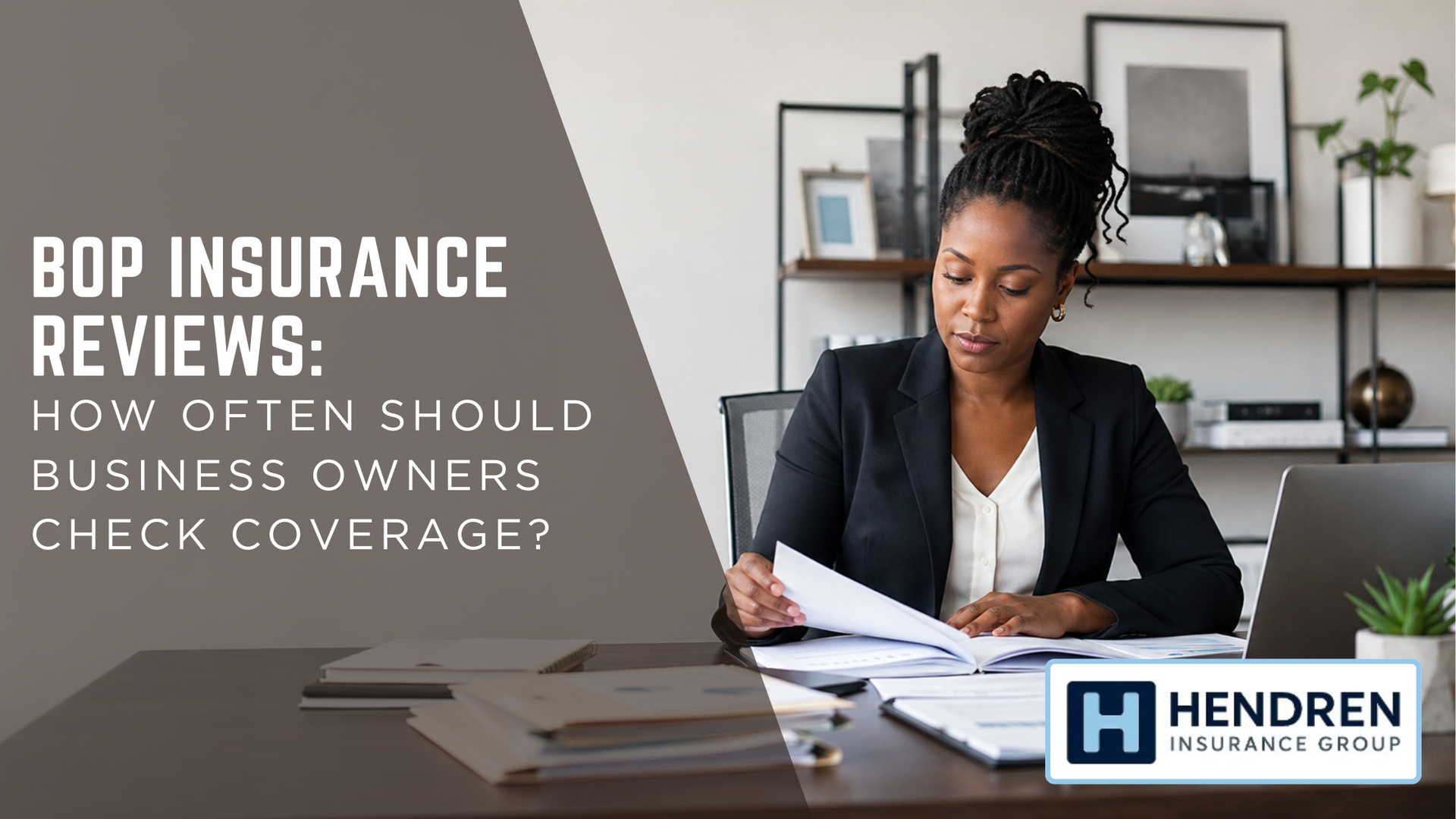
A Business Owners Policy can remain in force year after year, but that does not mean the coverage should remain unchanged. For business owners in Owasso, OK, regular BOP reviews can help identify outdated limits, new exposures, and operational changes before they create problems during a claim.
What a Business Owners Policy Typically Includes
A
Business Owners Policy, commonly called a BOP, combines several important commercial coverages into one package.
Most BOPs include some combination of:
- Commercial property insurance
- General liability insurance
- Business income coverage
Depending on the insurer, additional endorsements may be available for equipment breakdown, cyber incidents, hired and non-owned auto liability, water backup, employment-related exposures, or other risks.
A
BOP can be a practical solution for many small and midsize businesses because it packages common protections together. However, the policy still needs to reflect the company's current operations.
In our work with business owners, one of the most common issues we see is a policy that was appropriate when originally purchased but was never updated as the business grew.
Review Your BOP at Least Once a Year
For most businesses, an annual insurance review is a sensible baseline.
The policy renewal period is a natural time to look at what has changed during the previous year and whether current limits still make sense.
An annual review should address questions such as:
- Has revenue increased or decreased?
- Has the company purchased new equipment?
- Has inventory grown?
- Have operations expanded?
- Are more customers visiting the premises?
- Has the business moved or added another location?
- Have renovations increased property values?
The objective is not simply to renew the same policy automatically.
The goal is to confirm that the insurance still matches how the business operates today.
Do Not Wait for Renewal After a Major Change
Annual reviews are important, but some changes should be reported when they happen.
If the business experiences a significant operational change halfway through the policy term, waiting several months for renewal may leave a gap.
For example, contact your insurance professional after major changes such as:
- Moving to a new building
- Opening another location
- Adding a new service
- Purchasing expensive machinery
- Significantly increasing inventory
- Starting delivery operations
- Adding leased equipment
- Renovating the premises
A retailer near Bailey Ranch that substantially expands inventory before a busy season may need a higher property limit immediately rather than at the next renewal.
Insurance works best when the policy reflects current exposures instead of last year's business.
Check Building and Business Property Limits
Property values can change significantly over time.
Businesses may purchase computers, tools, furniture, machinery, inventory, signage, or specialized equipment without considering how those purchases affect insurance limits.
If a BOP lists $100,000 of business personal property but the company now owns $175,000 worth of equipment and inventory, a major loss could expose the business to a substantial shortfall.
Building owners should also review reconstruction costs.
The amount paid for a building is not necessarily the same as the amount required to rebuild it after a total loss.
Construction costs, labor rates, materials, code requirements, and building improvements can all affect replacement costs.
Review Your General Liability Exposure
A company's liability exposure can increase even when its physical location does not change.
Consider whether the business now:
- Serves more customers
- Hosts events
- Performs work at customer locations
- Uses subcontractors
- Sells new products
- Provides new services
- Works on larger contracts
Each change can affect the likelihood or potential severity of liability claims.
For example, a company that initially provided office-based consulting but later began sending employees onto customer premises may have materially different liability exposure.
The existing policy should be reviewed to make sure those operations are properly described and covered.
Business Income Limits Deserve Special Attention
Business income coverage can help replace qualifying lost income and certain continuing expenses when a covered property loss temporarily interrupts operations.
This coverage is often overlooked during renewals.
If revenue, payroll, rent, or other operating costs have increased, the business income protection selected several years ago may no longer be sufficient.
Business owners should consider how long operations could realistically be disrupted after a serious event such as a fire.
A company may need time to:
- Repair or rebuild the premises
- Replace equipment
- Restock inventory
- Obtain permits
- Reconnect utilities
- Rehire or retain employees
- Reestablish customer operations
The recovery period can extend well beyond the physical repair itself.
Review New Technology and Cyber Exposure
Many small businesses now rely heavily on cloud software, electronic payments, customer databases, email, and digital records.
A traditional
BOP may provide little or no protection for certain cyber-related losses.
If the business stores customer information, accepts online payments, or depends heavily on computer systems, cyber insurance may deserve consideration.
Cyber coverage can potentially address risks such as data breaches, ransomware, business interruption, notification expenses, and certain liability claims, depending on the policy.
A business operating near Stone Canyon may have very different technology exposure today than it did when its BOP was first purchased five years ago.
Insurance reviews should account for operational technology, not just buildings and furniture.
Check Whether Commercial Auto Exposure Has Developed
Some businesses begin without company vehicles and gradually start using personal vehicles for deliveries, errands, client visits, or transporting equipment.
A
standard BOP does not automatically replace commercial auto insurance.
Even when the company does not own vehicles, hired and non-owned auto liability coverage may be worth reviewing if employees use personal or rented vehicles for business purposes.
If the company later purchases titled business vehicles, a separate commercial auto policy may be necessary.
This is a good example of why insurance should evolve alongside day-to-day operations.
Review Equipment and Property Away From Your Premises
Standard commercial property coverage may focus primarily on property at the insured location.
Businesses that regularly move equipment, tools, materials, or inventory away from their premises may need inland marine or other specialized coverage.
Contractors are a common example, but mobile service businesses, photographers, technology companies, and event businesses can face similar exposures.
If valuable equipment routinely travels between locations, discuss that arrangement during the BOP review.
Do not assume property has identical coverage wherever it happens to be.
Look at Your Deductibles, Not Just Limits
Insurance reviews should also include deductibles.
A higher deductible can help reduce premiums, but it increases the amount the business must absorb after a covered loss.
As the company grows, its ability to handle a larger deductible may improve.
The opposite can also happen. If cash reserves are tighter, a deductible selected years ago may now create too much financial strain.
The right deductible should fit the company's current balance between risk tolerance, available cash, and premium budget.
Review Contracts and Insurance Requirements
New customer or landlord contracts can create insurance requirements that did not exist when the policy was purchased.
A contract may require:
- Higher general liability limits
- Additional insured status
- Waiver of subrogation
- Primary and noncontributory wording
- Specific property coverage
- Umbrella liability coverage
Business owners should provide insurance requirements to their agent before signing agreements whenever possible.
A certificate of insurance cannot create coverage that is not already provided by the underlying policy.
Early review gives the business time to determine whether changes are needed.
Consider an Umbrella as the Business Grows
A growing company may eventually need liability limits beyond those available in the underlying
BOP.
Commercial umbrella or excess liability insurance can provide additional limits above certain underlying liability policies, subject to policy terms.
Businesses with greater assets, larger contracts, significant customer traffic, or increasing lawsuit exposure may benefit from discussing whether additional limits are appropriate.
For businesses in Owasso, OK, growth should trigger a broader discussion about how much financial exposure the company can realistically retain.
Keep Accurate Information on File
Insurance pricing and coverage depend heavily on accurate business information.
During each review, verify details such as:
- Revenue
- Payroll
- Employee count
- Business description
- Square footage
- Inventory value
- Equipment value
- Locations
- Building improvements
Incorrect information can create underwriting problems and complicate claims.
It is better to update the insurer as the business changes than to discover after a loss that the policy was based on outdated operations.
Conclusion
A
BOP should generally be reviewed at least annually and whenever the business experiences a meaningful change in operations, property, revenue, locations, contracts, or liability exposure. Regular reviews help business owners identify coverage gaps early and keep limits, deductibles, and optional protections aligned with the company they operate today.
At Hendren Insurance Group, we believe in protecting what matters most to you. Our experienced team is here to help you find insurance coverage that’s both affordable and customized to your unique needs. Contact us today at (918) 272-4700 or
CLICK HERE to request your free quote.
Disclaimer: The content of this blog is intended solely for general informational use. For advice tailored to your situation, consult a licensed insurance professional who can offer expert recommendations.
Hendren Insurance Group
Owasso, OK
(918) 272-4700
contact@insureowasso.com
https://www.insureowasso.com/